What Living Next to Piedmont Actually Costs an Oakland Buyer
Caitlin Crawford October 1, 2026
Caitlin Crawford October 1, 2026
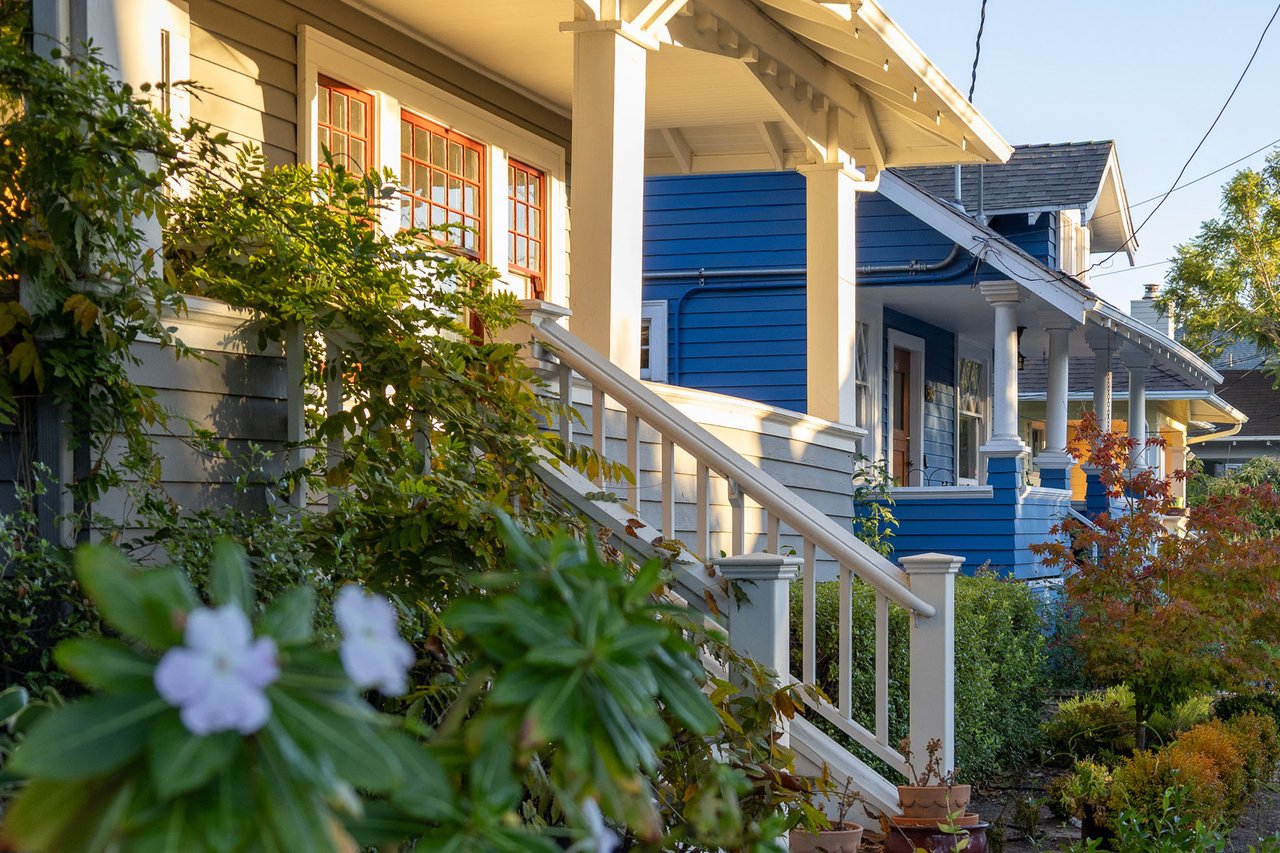
Piedmont has no fence around it. The city is a single square mile of hillside completely surrounded by Oakland, bordered on one side by Mountain View Cemetery and on the other by Sausal Creek and the Dimond Canyon Trail. Drive from Crocker Highlands into Piedmont and the only signal you've left one city for another is a sign and, often, a slightly narrower street. Most buyers comparing a home in Crocker Highlands, Glenview, or Upper Rockridge to one just across that line assume the difference is schools and square footage. It is. But it's also two separate municipal funding systems, and the costs of that divide don't show up in a listing photo.
Piedmont is its own incorporated city, with its own police department, fire department, and school district, entirely independent of Oakland's. That distinction matters more in 2026 than it has in years, because Piedmont has local tax changes underway while Oakland's tax structure stays put.
For a buyer weighing a Crocker Highlands Tudor against a similarly priced Piedmont home, the honest comparison isn't just the sale price. It's what each city bills you for, every year, for as long as you own the place.
Oakland residents pay for police, fire, and public works through the city's general fund, the same pool that covers every other Oakland neighborhood. The City of Piedmont says residents pay for those same services through a separate, dedicated levy called the Municipal Services Special Tax, often shortened to the City Services Tax. It's a flat parcel tax that scales with lot size rather than sale price, and it funds roughly 7% of the city's general fund on its own.
Piedmont voters last increased this tax through Measure F in March 2024, a 20% rate hike that added $11 to $19 a month for most households and extended the tax for 12 years instead of the usual four. Part of that increase went toward staffing a second 911 dispatcher, closing a staffing gap that had gone unaddressed since 1978. A comparable house in Glenview or Crocker Highlands has no equivalent line item, because Oakland doesn't fund its police and fire departments through a parcel-by-parcel city-only tax.
Piedmont Unified School District has run its own local parcel tax since 1985, renewed by voters nine times since. In June 2026, Piedmont voters extended the existing $3,174 annual parcel tax indefinitely, until it's modified or repealed at the ballot box, through Measure H. The measure passed with more than 80% support in a district of roughly 2,500 students, well above the two-thirds threshold required. That single tax now makes up more than 20% of PUSD's operating budget. The Piedmont Unified School District says Supplemental Security Income recipients who own and occupy their property, regardless of age, can apply for an exemption, but for most homeowners it's a fixed, non-negotiable annual charge layered on top of the standard county rate.
According to Oakland Unified, the district's parcel tax measures include Measure G, Measure G1, and Measure H, with senior exemptions available on the last two.
The Piedmont Exedra reported that Piedmont's transfer tax has sat at 1.3% for 33 years. The Piedmont Exedra reported that the City Council adopted an ordinance in July to raise the rate to 1.75%, or $17.50 per $1,000, subject to voter approval on November 3, 2026. The city's own agenda materials frame the increase explicitly as bringing Piedmont "more in line with neighboring cities," naming Albany, Berkeley, Emeryville, and Oakland as cities that already charge more. If approved, the new rate wouldn't take effect until July 1, 2027, and the tax is one-time, paid at the sale, typically split between buyer and seller by local custom though the split itself is negotiable.
According to the City of Oakland, its transfer tax is tiered rather than flat, running from 1% to 2.5% depending on sale price, which is already the more expensive side of this comparison at almost every price point below the very top of Piedmont's market.
Cost layer | Piedmont | Oakland (Crocker Highlands, Glenview, Upper Rockridge) |
|---|---|---|
County ad valorem base | Under Proposition 13, 1% plus voter-approved debt service | 1% plus voter-approved debt service, standard statewide |
City services | Municipal Services Tax, flat per parcel, scaled by lot size, funds ~7% of general fund | Folded into Oakland's citywide general fund, no separate parcel-based city services charge |
Schools | PUSD parcel tax, $3,174/year, renewed indefinitely via Measure H (June 2026) | OUSD Measures G, G1, and H, with senior exemptions on two of the three |
Transfer tax at sale | 1.3% flat today, on the ballot to rise to 1.75% in November 2026, effective July 2027 if approved by voters | Tiered from 1% to 2.5% depending on sale price |
The school argument for paying a Piedmont premium is real and straightforward. Piedmont Unified runs a single-city K-12 structure, while a school like Crocker Highlands Elementary sits inside the much larger Oakland Unified system, where neighborhood children are prioritized but not guaranteed a seat, and families reapply during the transitions into middle and high school. That's a legitimate reason some buyers pay more to cross the line.
What isn't legitimate, or at least isn't accurate, is treating the rest of the price gap as pure market premium. Part of what looks like Piedmont pricing power is actually two households paying for two different city governments, one of which has local tax changes underway this year while the other holds steady. A buyer who prices Piedmont purely against Oakland's median sale figures is missing the annual parcel tax delta and the pending transfer tax uncertainty, both of which change the real cost of ownership independent of what either house is listed for.
Before making an offer on either side of that line, ask for the specific parcel size and use classification on any Piedmont listing, since the Municipal Services Tax is billed by lot size rather than a flat rate. Ask your lender or agent to model the school parcel tax as a separate fixed annual line rather than folding it into a general property tax estimate.
Does Measure GG affect a Piedmont home I buy now, before the vote? No. The proposed 1.75% rate would only take effect July 1, 2027, and only if voters approve it in November 2026. A purchase that closes before then would not be subject to the proposed rate.
Comparing a Piedmont address to its Oakland neighbors is a legitimate exercise. It just requires pricing the parts that don't show up in the sale price alongside the parts that do. If you're weighing a home on either side of that line and want the actual numbers run for your specific parcel and price point, Caitlin Crawford can walk through what each tax layer means for your offer before you write it.
This article is general information, not legal, tax or financial advice. Consult a qualified professional about your situation.
Stay up to date on the latest real estate trends.




Partner with Caitlin for a personalized and seamless real estate experience. With a client-first approach, she provides expert guidance, clear communication, and dedicated support every step of the way. Whether you’re buying, selling, or exploring your options, Caitlin ensures that your goals are met with confidence and ease.